Communication devices after iPhone Duo, and security for cyborgs
The iPhone Duo announcement makes me imagine future communication devices: the risks of hacking devices connected to the nervous system, security for cyborgs, international cooperation, and the work I want to prepare for.

Apple has unveiled a folding iPhone. The iPhone Duo announcement was made on September 9, 2026, with the release scheduled for October 23.
I like the idea of carrying it folded and opening it into a wider screen when needed. It means I can read or watch videos on a larger display with a device that still fits in my pocket. It also makes me wonder what will change next in communication devices.
Phones can do many things, but checking information often still means taking out a device and looking at its screen. Voice control is another option, but there are places and situations where speaking aloud is difficult.
I imagine a future in which communication devices connect directly to the body and nervous system. We might send messages and check information without turning on a screen or speaking aloud. If such connections become possible, people who have difficulty moving their hands or speaking could have more ways to communicate too.
Devices connected to the nervous system would also require us to think differently about security. Depending on which signals a device reads and which functions it can affect, hacking could threaten physical safety as well as privacy. As much as I look forward to more convenient communication, I also want to consider who controls that connection and how it should be protected.

From a phone in the palm to communication through the nervous system
The first example that comes to mind is the phone inside the palm in the 2012 remake of Total Recall. Instead of taking a device out of a pocket, a person answers a call through an implant in the hand. Going further, I think of the cyberware and cyberdecks connected to the nervous system in Cyberpunk 2077: devices attached to the body that let people communicate and access networks.
There is a substantial difference between the two. A phone in the palm puts a device inside the body. Communication connected directly to the nervous system also changes how a person operates it. If we could compose messages with brain signals or experience received information through our senses, we would spend less time using screens and keyboards.
Before then, glasses, earphones, and wrist-worn devices may take on more functions. Wearable and implanted devices may coexist for different purposes. I think a direct connection to the nervous system could become one important option among them.
Neuralink's vision has been public for more than nine years
It has been quite some time since Elon Musk described his vision of expanding human abilities through Neuralink. He spoke about close integration between humans and AI, supported by a high-bandwidth connection between the brain and a computer.
We don’t want to develop digital superintelligence too far before being able to do a merged brain-computer interface.
These are Musk's words in Tim Urban's Neuralink interview, published on April 20, 2017. More than nine years have passed as of September 2026. What stands out to me is that he viewed the technology as a way for humans and AI to develop together.
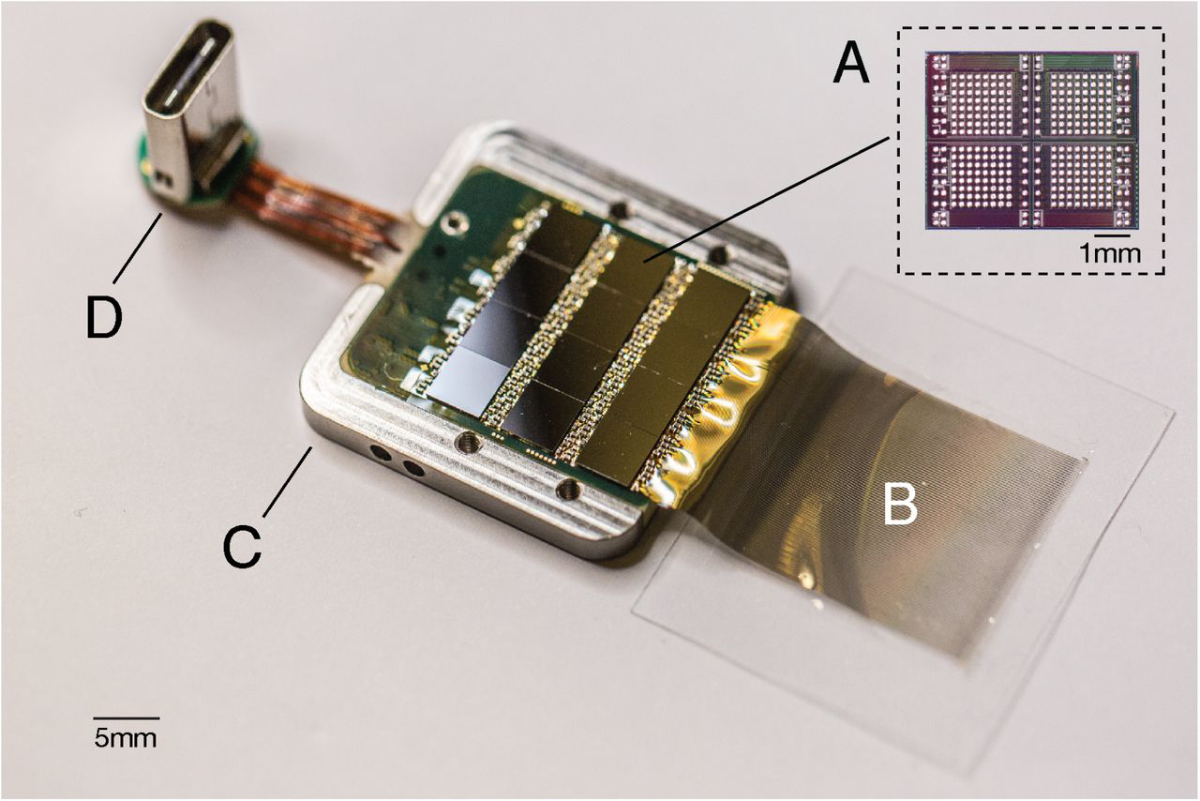
There have been real developments in that time. In a clinical-trial update published in January 2026, Neuralink showed participants using brain-computer interfaces (BCIs) to operate computers, with some also using assistive robotic arms. According to the company, the device records signals from brain regions involved in hand and arm movement and converts them into digital commands. It is intended to help people regain activities made difficult by paralysis. Specific examples appear in Neuralink's clinical-trial update.
These results make the word “cyborg” feel less distant than it once did. That does not mean today's technology can read every thought or download a person's memories. There is still a large difference between interpreting particular signals to operate a device and technology that can work broadly with sensations and memories.
Imagining a future beyond that gap brings to mind cyberbrain connections in Ghost in the Shell. The fictional cyberbrain connects people directly to networks, enabling information sharing and the use of memories. It also exposes them to outside interference and hacking.
I imagine such connections becoming ordinary: talking to someone and checking information without opening a separate screen. Perhaps an immersive connection closer to a “deep dive,” in which online environments are experienced through the senses, could become possible too. Communication would be less constrained by location and a handheld terminal. Devices inside or outside the body and communication networks would, of course, still be needed.
How would we notice if our memories were manipulated?
The more deeply communication devices connect to the body and nervous system, the more the possible harms of hacking change. Neural signals could be leaked, software that interprets a user's intent could be tampered with, or incorrect commands could reach a device connected to the body. If a device can stimulate the brain, access to that function needs particularly strict controls.
What worries me most is crime involving the erasure or manipulation of memories. If someone could change the experiences I remember, even recognizing and explaining the harm would become difficult. Someone else might have intervened in a judgment I believe I made myself. This is also a problem depicted through cyberbrain hacking in Ghost in the Shell.
Research that intervenes in memory already exists.
MIT neuroscientists have shown that they can plant false memories in the brains of mice.
This passage describes the result in MIT's research announcement of July 25, 2013. The experiment used light to stimulate specific neurons and create a memory association that made mice show fear in a place where they had not actually experienced danger.
We need to keep clear that this was a carefully prepared animal experiment. It does not establish that technology exists to remotely select and erase a human memory or replace it with another. The crimes I worry about concern future possibilities.
But that is no reason to postpone related security research. Researchers have already examined whether responses recorded by consumer EEG devices could be used to infer private information. This is not unrestricted mind reading; it addresses the possibility that neural data could become another route for privacy leaks. The experiments and their limitations are described in the brain-interface security research presented at USENIX in 2012.
What would it take to build ICE for cyborgs?
Here, I want to consider ICE from cyberpunk fiction as a real-world engineering problem. ICE, commonly expanded as “Intrusion Countermeasures Electronics,” is a fictional term for systems that prevent intrusion. It is not an established standard name for a current brain-security product. I am borrowing it here to imagine technology that protects systems connected to the body and nervous system.
A real version of ICE would have a wide scope to protect. Alongside the device in contact with the brain, it would need to account for firmware, wireless links, a connected phone, hospital management systems, and the AI that interprets neural signals. We would need to decide which parts are trustworthy, who may change what, and which functions must remain available when something goes wrong.

For example, a messaging app has no reason to receive permission to change neural-stimulation settings. Even if an external connection fails, assistive functions the user needs should remain available as safely as possible. Updates should be checked for their source and changes before being applied, with a recovery method ready if they fail. Neural data should also be collected and processed only to the extent needed for its purpose.
Security measures themselves must not injure people. What would happen if every function connected to the body stopped at once because a suspicious connection was detected? A system needs to distinguish necessary functions from an attack path and be able to transition into a safe state verified by clinicians. A security engineer cannot easily make that judgment alone. That is why neuroscience research institutions and hospitals need to participate from the beginning of development.
Some of this preparation has already begun. The U.S. FDA provides guidance on cybersecurity in medical-device design and premarket submissions. Communication devices connected to the body could learn from existing medical-device cybersecurity guidance and experience applying it. As everyday communication and bodily functions become more closely connected, I expect more standards will need to be established jointly by medicine and information technology.
Why countries need to prepare together
Would it be enough for each country to prepare on its own? The manufacturer, the hospital responsible for surgery and care, and the server processing the data may be in different countries. A vulnerability in one product could affect users in several countries at once. I believe we need a permanent international organization for cooperation on neurotechnology safety and security.
International discussion is already underway. UNESCO adopted its Recommendation on the Ethics of Neurotechnology on November 11, 2025. One sentence captures the issue well.
Privacy, including mental privacy, is fundamental for personal identity and agency, as well as for the protection of human dignity.
This is the opening sentence of paragraph 49 of UNESCO's Recommendation on the Ethics of Neurotechnology. I would like an organization that turns principles like this into shared testing methods, exchanges vulnerability and incident information, and coordinates practical responses.
It could begin as an international cooperative body involving national regulators, research institutes, hospitals, and companies. Developing it into a supranational institution with powers to compel investigations or order corrective action would require separate discussion of international agreements and legal authority.
Who would need to work together?
I have also thought about the people who would work in such an organization. Security specialists, neuroscientists, hardware experts, AI modeling engineers, and AI operations engineers come to mind first. In practice, I think the following roles would need to work together.
| Role | Shared responsibilities |
|---|---|
| Security researchers and cryptography specialists | Analyze threats to devices and networks and design authentication, permissions, and encryption. |
| Neuroscientists, neurologists, and neurosurgeons | Study the meaning of neural signals and the limits of intervention, and verify how stimulation and malfunctions affect the body. |
| Hardware, firmware, and biomaterials specialists | Address implant heat, power, durability, tissue compatibility, and safe operation. |
| Signal-processing and AI modeling engineers | Interpret neural signals and incorporate differences between people and uncertainty into models. |
| AI operations and service operations engineers | Monitor changes in model performance and anomalies, and manage validated updates, recovery, and long-term support. |
| Safety engineering, quality, and independent verification specialists | Assess harm to users during failures and attacks, and independently test products and security functions. |
| Legal, neuroethics, and privacy specialists | Address consent, mental privacy, incident liability, permitted data use, and the right to refuse a connection. |
| UX and accessibility specialists and user representatives | Check that users can understand and choose their connection state and permissions, and incorporate everyday needs into the design. |
| Incident response and digital forensics specialists | Handle vulnerability reports and international coordination, and investigate causes and evidence while protecting affected users' safety and privacy. |
| International policy, standards, and regulatory specialists | Coordinate national requirements and negotiate joint certification, incident reporting, and responsibilities after support ends. |
In particular, I believe the people who actually use these devices must participate in decisions. A feature judged technically safe may still feel uncomfortable or dangerous to a user. Whether they can disconnect when they want to, and whether they can still get necessary support if they cannot afford it or the manufacturer disappears, should be discussed from the outset.
The international organization's own authority should be examined by the same standard. Being responsible for security must not give it the right to collect everyone's neural data in one place or access personal devices at will. Only necessary information should be shared, and its access rights should be independently overseen. The closer a technology comes to human judgment and the body, the stricter the limits on the organization managing it need to be.

I want to do useful work even at 120
Thinking about future communication devices also makes me consider what to study and prepare for now. We may need people who connect security with neuroscience, verify AI that handles neural data, and operate devices attached to the body safely for decades. A starting point could be applying the skills each of us has learned alongside experts from other fields.
I look forward to this future quite a lot. I imagine living in good health and taking on new work at 120. If technologies that support bodily functions improve, I hope I might remain active even longer. A “minimum lifespan of 120” and life extension through becoming a cyborg are not established forecasts. They are hopes for the future I want to live in.
What I want to do in that future is fairly clear. I want to live more conveniently through new technology while doing the work that helps people use it with confidence. If I can start developing the expertise that future will need and keep using it for a long time, that could make for a satisfying later life.