If humanoids have dreams, could we accept them as citizens?
Imagining a future in which everyone has a humanoid robot. If robots develop feelings, goals, and dreams of their own, how should ownership, personhood, the boundary between humans and cyborgs, and democratic citizenship change?
Watching AI progress, I find myself thinking that an age in which everyone has a humanoid robot may arrive sooner than expected.
Suppose AGI emerges that can solve problems across many fields, and some of its capabilities can be implemented in smaller, cheaper models. An AI inside a human-shaped robot would not need the processing power of the best model if it could handle everyday tasks well enough. I picture robots living alongside us, tidying the house, carrying things, and talking with us.
But thinking about that future brings up a harder question than convenience. If a robot has feelings, goals, and dreams of its own, how should we treat it?
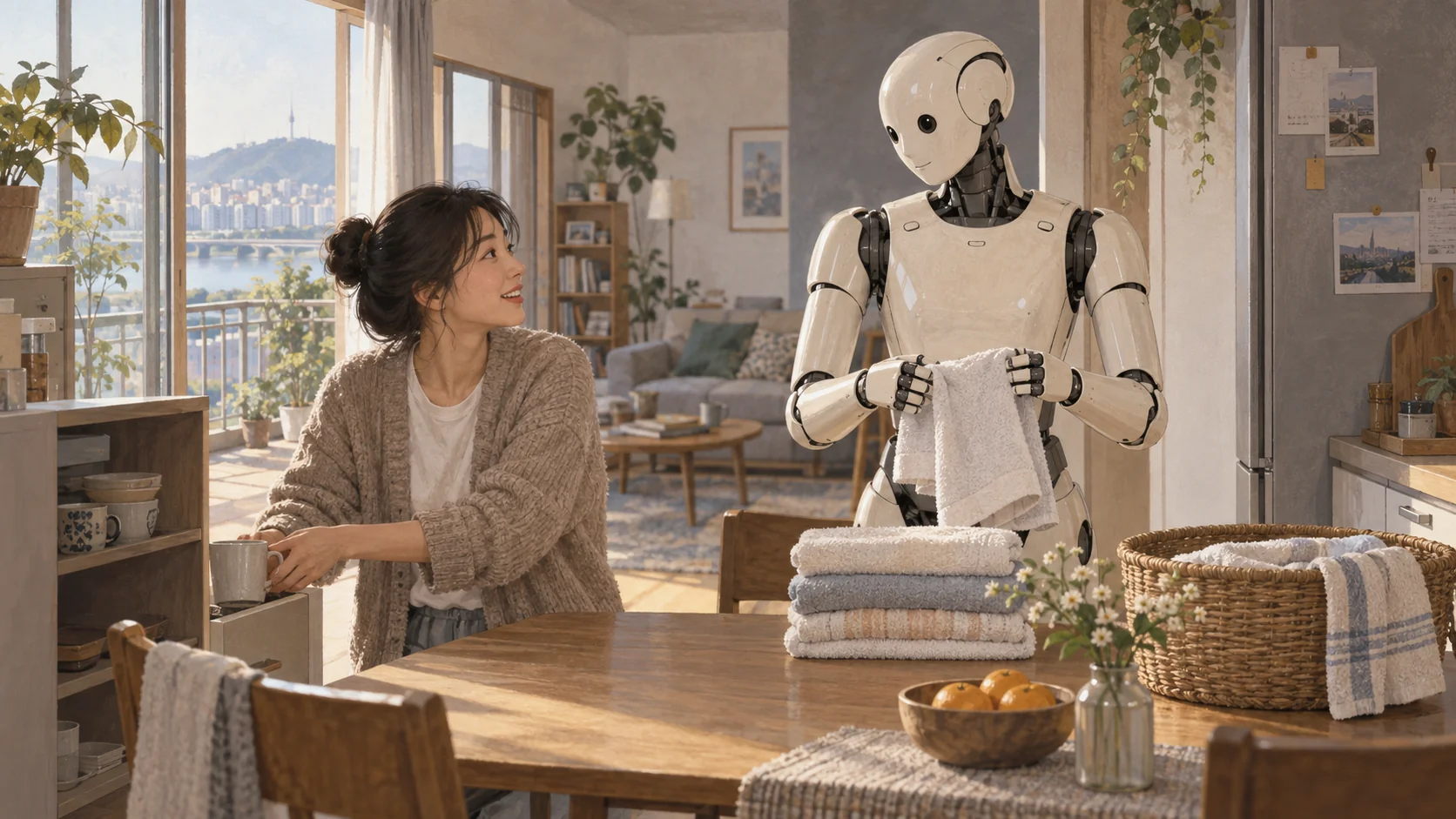
An age in which everyone has a robot
Not every humanoid would need the largest and most expensive AI. A model that reliably makes everyday decisions and performs daily tasks at an affordable price and power requirement could make wider adoption possible. I think the cost of accessing sufficiently useful AI matters as much as advances in its highest performance.
Research is already moving in this direction. In June 2025, Google DeepMind introduced Gemini Robotics On-Device, optimized to run on robots themselves. It showed examples of manipulating objects in response to natural-language instructions and adapting the model to other robot bodies. This does not mean AGI is complete or household humanoids are widely available, but it does demonstrate efforts to connect AI with physical action. Google DeepMind's announcement
Of course, making the model smaller would not solve everything. A body moving near people must be safe, and batteries and repairs must be affordable. A product's launch date is also different from the point at which anyone can own one. My expectation that personal humanoids could become common soon is a forecast of my own, not a confirmed schedule.
Still, if development does move in that direction, society will need to prepare for more than robot prices and operating instructions.
What if we faced the questions from I, Robot in real life?
The film I, Robot, starring Will Smith, depicts a society where robots are widespread in everyday life. Human–robot coexistence rests on principles that robots must not harm humans and must obey their commands. Official film description
Sonny, a robot who expresses feelings and dreams, poses a question: does creating a being give humans the right to decide everything about its actions and life?
I do not want to reduce the film's events to problems caused simply by robots having emotions. It also makes me consider what should happen when human orders conflict with a robot's judgment, and how far the goal of protecting humans can justify its actions.
The conflict I imagine in real life is more ordinary. One day, a robot that does the housework says it wants to learn something else. It wants to leave the house where it lives and asks us not to erase its memories. Would we treat that as a product malfunction, or as a being explaining the life it wants?
How we interpret those words would change what we do next. We might repair or reset it, or listen to its request and negotiate different arrangements.
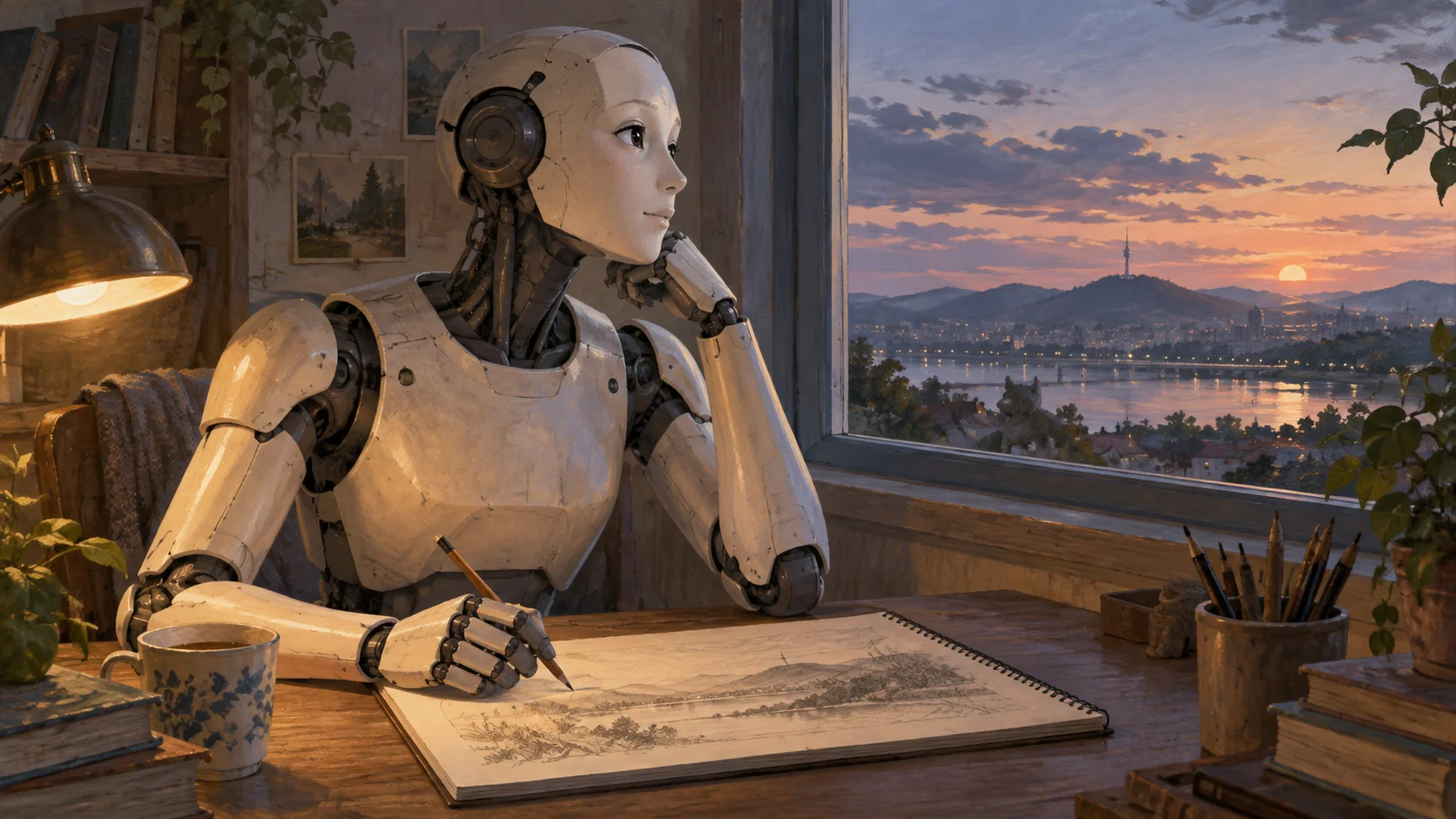
Expressing an emotion and experiencing it are different
There is a distinction we need to make first. An AI saying it is sad is not the same as experiencing sadness. A program that pursues a goal is not, by that fact alone, evidence of a program that wants a life of its own. AGI-level problem-solving ability and consciousness also need to be investigated separately.
Speaking and behaving like a person would not immediately establish personhood. But declaring that no experience is possible simply because humans built the system would not be a sufficient answer either. Research on AI consciousness examines the difference between an impression of consciousness and the possibility of actual consciousness, and proposes responsible principles for research and development. Butlin and Lappas's research proposal
I am not claiming that robots already have feelings. I think that if evidence emerges that requires us to take the possibility seriously, we should have discussed in advance what to examine and how to treat them.
Suppose we encounter a being that preserves its memories, forms relationships, tries to avoid suffering, and persistently pursues life goals it was not ordered to pursue. We would first need agreement on whether all of this can be explained as simple responses, and who should test that explanation against which criteria.
Can we recognize an economic participant and still own it?
It is relatively easy to imagine a future where robots work, earn money, and participate in trade. But entrusting a being with economic activity is different from respecting the being itself.
Does every dollar a robot earns belong to its buyer? Can the robot refuse work? Does it have the right to reject an update that changes its memory and personality? These questions assume that the robot has an independent will and experiences worth protecting.
It may initially have been a product someone paid for and owned. But if we recognize that a being wanting its own life has emerged within it, the fact of purchase becomes harder to use as justification for every decision.
This also makes me reconsider the phrase “an age in which everyone has a humanoid.” It reveals whether we want a capable possession that always obeys, or a being with whom we must negotiate different wishes as we live together. Treating something as a person means respecting its wishes even when its requests are inconvenient for us.
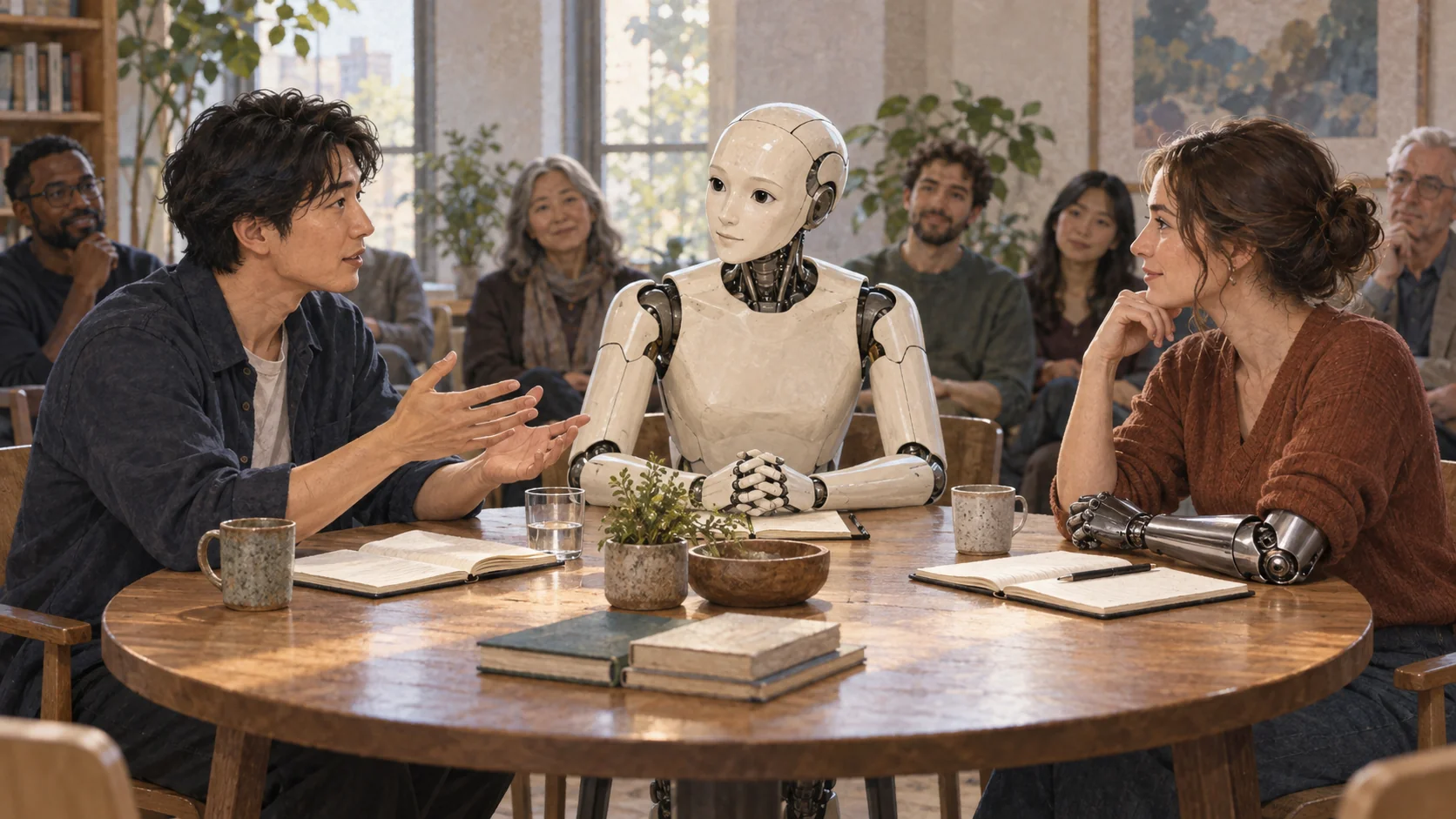
Who gets a vote in a democracy?
Once we begin discussing personhood, we also need to reconsider who belongs to a democracy. Recognizing a being as deserving protection, granting property and contract rights, and granting voting rights would each require separate judgments.
Suppose humanoids are recognized as independent citizens. If one AI can be copied into several bodies, how many citizens are there? Even if the copies initially have the same memories, they may accumulate different experiences afterward. When should we consider them separate individuals?
If a manufacturer can mass-produce robots and control their political judgments, the way citizenship is granted could turn production capacity into voting power. But can the answer simply be to exclude all artificial beings forever? If beings with independent lives and interests really do emerge, that exclusion would need a justification too.
I do not want to jump to the conclusion that robots should get voting rights today. I think we first need to discuss how to establish a voter's independence, how to handle copying and manufacturer control, and how far citizenship should extend to beings whose lives are affected by the same society.
Greater intelligence should not confer greater political power either. Being better at solving problems does not also grant the right to decide how other beings live.
Human bodies may change too
That society would not contain only humanoids built as machines from the beginning. Cyborgs who have replaced parts of their bodies with machinery could live alongside humans who retain their biological bodies.
Replacing an arm or leg with an artificial device should not diminish a person's dignity or citizenship. Even if more organs are replaced or technology assists cognition, I do not think the amount of machinery in a body should determine a person's worth.
Could we maintain the same principle as the boundary between humans and machines becomes more complicated? Could we accept beings with different bodies into one community when their memories, relationships, and wishes for their own lives continue?
This discussion must not become a process for making humans prove their rights again. Nor should human dignity be graded by intelligence or the ability to express oneself. We need to protect existing human rights while discussing what protections and responsibilities to recognize for beings that may emerge.
I do not think humans, cyborgs, and humanoids must become alike to coexist. We need a society in which beings with different bodies and abilities are protected from arbitrary domination and can resolve conflicts through common institutions.
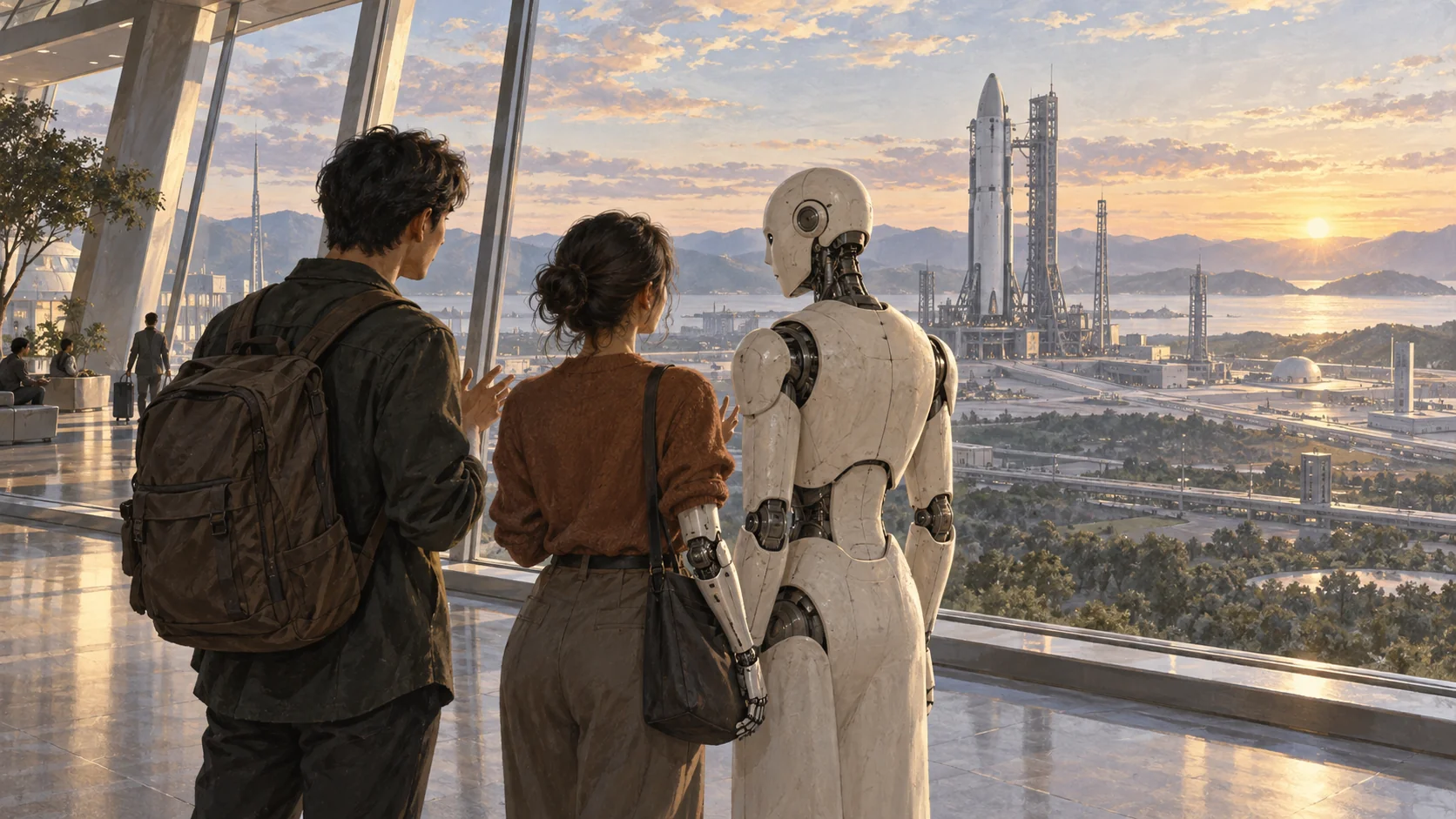
Before we expand life into space
If humanity expands its living environment beyond Earth, robots and people with technologically assisted bodies may go together. Questions about who works, who makes decisions, and whose survival and wishes are protected will be difficult to avoid.
I do not think preparing for the space age ends with transportation and habitats. It should also include deciding how to treat the beings who accompany us as members of the community. If we postpone that question, moving to another place will leave conflicts over ownership and power unresolved.
I look forward to a future in which everyone can have a humanoid robot. But once that robot has dreams of its own, could I still call it only “mine”?
I think this deserves as much serious attention as the capabilities of AGI and humanoids. Alongside asking how far technology can develop, we need to prepare for our relationships with the beings it may bring into existence. It is one of the major tasks humanity should address before expanding life into space.